

Key programming is the process of registering a compatible electronic key with a vehicle’s immobiliser system. The right key programming method depends on the vehicle system, the key type and current application support. This guide explains where to start, how cloning differs from adding a key to the vehicle, and the three checks to make before you begin.
How does key programming work?
On modern vehicles, the engine will only start once the immobiliser recognises the transponder chip inside the key. If the system detects a key that is not registered, it will not allow the engine to run. That is why the immobiliser sits at the centre of every key programming job.
On most systems, the match between the vehicle and the key relies on encrypted communication. During key programming, either the identity of the new key is stored in the vehicle system, or the data from an existing key is transferred to a compatible chip. Which route applies is determined by the vehicle’s system.
Mechanical fit vs. electronic pairing
A key that fits the lock mechanically has not necessarily been registered with the vehicle electronically. The compatibility between the transponder or smart key and the immobiliser has to be assessed separately. A remote that unlocks the doors and a key that starts the engine are also two different functions.
Cloning vs. adding a key to the vehicle
Cloning means transferring the data from a supported key to a compatible transponder. Adding a key to the vehicle is a different procedure, in which the key itself is registered in the vehicle system. Not every key can be cloned, and not every vehicle uses the same method for adding keys.
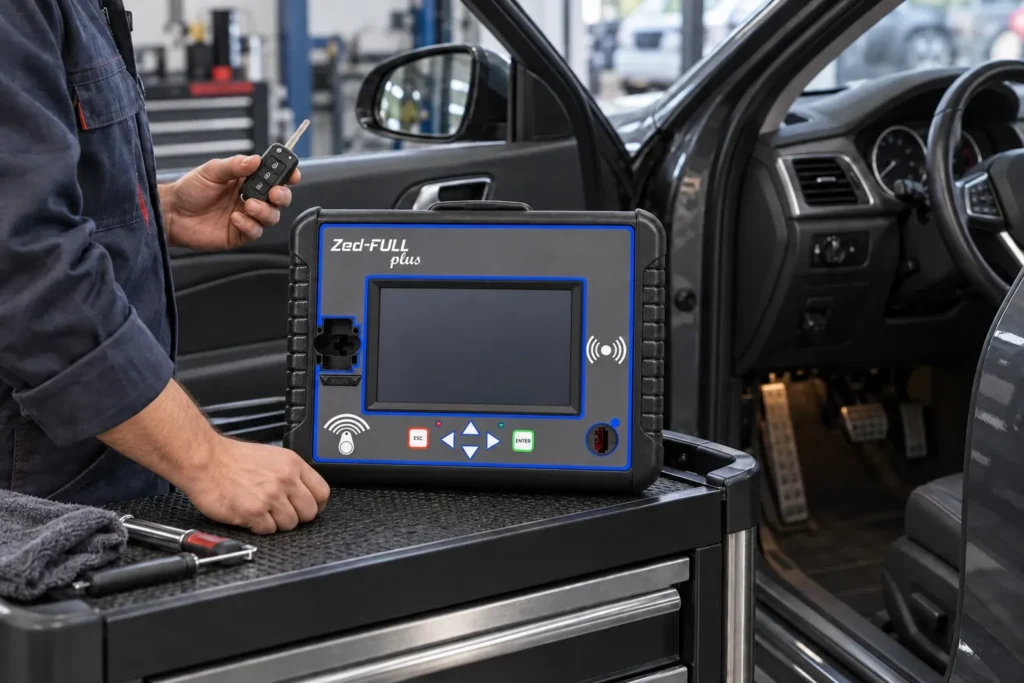
Zed-FULL plus offers transponder operations and adding keys via OBD as separate application groups. The software and accessories required for each job should be checked against the scope of the relevant application.
Three checks before key programming
First, identify the make, model, year of manufacture and immobiliser system. Next, confirm whether a working key is available; adding a spare key and an all-keys-lost situation may fall under different scopes. Finally, use the current application list to verify the supported operation and the required cable and software.
This preparation prevents you from choosing the wrong application based on the vehicle make alone. If the system is unclear, contact technical support with the vehicle and key details before you start the job.
Common key programming mistakes
The most common mistake is judging a vehicle by its make alone. Different models and years from the same manufacturer may use different immobiliser systems. That is why the year of manufacture and system details must always be confirmed before key programming.
The second common mistake is assuming that a key has been registered with the vehicle just because the remote unlocks the doors; the remote function and immobiliser pairing have to be checked separately. Another risk is a drop in battery voltage during the procedure. For longer jobs, make sure the vehicle battery is fully charged.
Methods used in key programming
In practice, there are three main routes. With transponder cloning, the data from the existing key is transferred to a compatible chip, and no further work on the vehicle may be needed. With OBD programming, the device connects to the vehicle’s diagnostic socket and the new key is registered in the system. With EEPROM or MCU work, the job is carried out through the memory of the relevant module.
Which of these methods is suitable depends on the vehicle’s immobiliser system, the key type and whether you have a working key. More than one route may be possible for the same vehicle; choose the method that requires the least intervention and has been confirmed as supported.
- Transponder cloning: requires a working key and a chip suitable for cloning.
- Adding a key via OBD: requires the right cable, software and a supported vehicle system.
- EEPROM and MCU: require an adaptor suited to the module and the connection details.
Frequently asked questions
Do I need a working key for key programming?
On some vehicle systems, a new key is easier to add while a working key is available. All-keys-lost situations may fall under a different application scope. Check the supported scenario in the current application list.
Is there a difference between a cloned key and a key added to the vehicle?
With cloning, the data from the existing key is transferred to the new chip, and the vehicle recognises the new key just like the original. When adding a key to the vehicle, the new key is registered in the system as a separate key. Which option is possible depends on the vehicle and the chip type.
How long does key programming take?
The time varies with the vehicle system, the method used and how well prepared you are. When the right application is selected in advance and the required cable and software are ready, the job can be completed much faster.
What equipment do I need for key programming?
The basics are a compatible programming device, the software package suited to the job, and a cable or adaptor that matches the vehicle’s connection type. Check the notes for the relevant application to see which parts are required.